Cognativ: Software Development, AI & Technology Solutions
Software development, AI, and technology consulting solutions for small and midsize businesses across the United States. We help SMB leaders decide what to change, build the software and automation to carry it out, and tie every investment to a measurable outcome through RAPID.
Connect business priorities with technology decisions and implementation. Explore support for strategy, operational change, AI, software, data, and cloud infrastructure.
Technology Strategy & Advisory Consulting
Current-State Assessment
Technology Options
Roadmap Priorities
Deciding where to invest or what to modernize? Assess your systems, compare build, buy, and integration options, and connect the next steps to your business priorities.
Connect business goals with changes in how work gets done. Examine processes, clarify responsibilities, and use RAPID to turn priorities into coordinated action across teams and systems.
Identify where AI and automation can improve the way your business works. Connect use-case assessment with implementation, system integration, and the controls needed to operate responsibly.
Build and evolve software around real business requirements. Connect applications, modernize existing platforms, and develop products that support the people and processes using them.
Bring disconnected data into a clearer business view. Connect sources, structure information, and develop reporting that helps teams understand performance and make informed decisions.
Align the infrastructure behind your applications with the way your business operates. Plan cloud architecture, migration, and delivery workflows around existing systems and operational requirements.
Your first consultation is always free. We respect the time you invest in exploring a change, so you leave that first conversation with a clearer view of the challenge, practical recommendations, and a concrete next step.
01
Start with a free consultation
Bring the business challenge, the systems involved, and what your team needs to achieve. You do not need a finished specification; we start by listening and asking the right questions.
02
Leave with clarity and practical direction
During that conversation, we help identify priorities, discuss realistic options, and share recommendations you can use. Where more investigation is needed, we make that clear rather than rush to a solution.
03
Agree on the right next step
If further support makes sense, we define the scope, people, and outputs together. That may mean an assessment, a roadmap, or guidance for an initiative already underway.
Tell Us About Your Next Initiative
Need a clearer business strategy, a practical transformation plan, or a way to put AI to work? Share your goals and the challenge your team needs to solve.
Include your priorities, current systems, and expected timeline so we can discuss the right next step.
RAPID: From Technology Strategy to Controlled Execution
RAPID connects Research, Analyze, Plan, Implement, and Decide. Use the framework to clarify constraints, establish ownership, and turn a technology roadmap into decisions and delivery that the business can follow.
Research
Details
Research is the starting point in Ali Davachi's RAPID framework: understand the business before choosing a solution. Cognativ examines how work moves between people and systems, where decisions wait, and what a successful outcome would mean for the organization.
This stage brings stakeholder priorities together with a baseline of current performance. Mapping handoffs, responsibilities, and operational risks gives the team a shared starting point for change instead of competing assumptions about what needs fixing.
Connect the process to customer value
Process
Name a process that takes meaningful effort. Start with customer service or operations, and describe the work precisely enough for someone else to follow it.
People
Identify the departments involved, including customers or vendors when they participate. Record risks and compliance requirements alongside the process.
Value
Connect the process to an outcome and a customer value. The inventory should explain why the work matters, not just list what the organization does.
Analyze
Details
Analyze turns the research into a focused diagnosis. Within Davachi's RAPID method, the question is not simply which tasks are slow, but which constraint prevents the business from making meaningful progress. That constraint may involve approvals, information access, or unclear responsibility.
Cognativ examines the causes and downstream effects of those delays before recommending more tools or parallel initiatives. The aim is to distinguish the primary bottleneck from its symptoms and identify which intervention deserves attention first.
Turn a process gap into a recommendation
Assessment
What to establish
Gap
Describe one process improvement for one department. Link the gap found during Research to the customer value and business outcome it affects.
Effort
Estimate the time needed to correct the process and identify the required skills. Make the work behind the recommendation visible before prioritizing it.
Recommendation
Record an initial recommendation, then refine it as the team learns more. Compare easy wins by customer value, outcome, time and cost rather than convenience alone.
Plan
Details
Plan connects the diagnosis to accountable work. RAPID organizes the next steps around business outcomes, rather than treating a list of technology features as the strategy. Each outcome needs an owner, a way to measure progress, and clarity about who can make tradeoffs.
Cognativ sequences the roadmap around the constraint identified during analysis. Dependencies and decision rights become part of the plan, helping leaders understand what should happen first and how each step supports the next.
Build the plan around customer needs
Anticipate
Look ahead to emerging customer needs. Consider whether the organization has a recurring planning cycle that notices changes before they become urgent.
Use evidence
Ask what data supports the customer plan. Separate evidence about customer needs from preferences or assumptions inside the business.
Involve the team
Bring customer-facing colleagues into planning. Their experience helps connect the intended outcome to the work required to deliver it.
A customer-informed plan
Implement
Details
Implement puts the plan into a working delivery rhythm. In RAPID, execution includes the decisions and coordination that keep work moving, not just the technical build. Cognativ connects delivery responsibilities with regular checkpoints so blockers can be addressed while they still matter.
Those reviews bring outcomes, constraints, and next commitments into the same conversation. Software, integration, or AI work follows the agreed business direction, while the team maintains visibility into ownership and the issues that need escalation.
Make the customer plan part of daily work
PrepareSet objectivesMeasureCustomer outcomes
Prepare
Once the direction is agreed, prepare the people who work with customers. They need to understand the plan and how their actions support it.
Set objectives
Translate the direction into objectives that support the customer plan. Execution needs a shared target, not only a set of assigned activities.
Measure
Review achievement against customer goals such as acquisition, retention or expansion. Activity alone does not show whether the customer plan is working.
Decide
Details
Decide keeps RAPID responsive to what the work reveals. Davachi presents transformation as an outcomes-based method for navigating change; this stage brings that purpose back into the team's choices. Progress is assessed through evidence, not simply the volume of completed tasks.
Cognativ reviews performance signals and emerging constraints to adjust priorities and update the plan. Decide is a recurring learning loop, rather than a final approval: the team uses what it learns to determine the next practical move.
Put decisions close to the customer
Authority
Authority
Identify who can make a commitment when a customer request arrives. Clear decision rights keep routine requests from waiting for senior approval.
Boundaries
Boundaries
Let the responsible person act within defined boundaries, including financial limits where appropriate. Make those limits clear before the request arrives.
Escalation
Escalation
Bring requests beyond those boundaries to the appropriate decision owner. Review recurring escalations to see whether authority or limits need clarification.
Accountable customer decisions
Why RAPID
Explore an outcomes-based approach to connecting business priorities, decision making, and execution. Understand the framework before choosing how to apply it.
Start with the current state: constraints, bottlenecks, ownership, and a practical review cadence. Establish what needs to change before expanding the program.
Understand how RAPID relates to other delivery and transformation approaches. Evaluate the fit against your organization's constraints and decision-making needs.
Cognativ brings business, engineering, AI, and operations into the same conversation. Technology choices need to work for the people and processes behind them.
Ali connects business strategy, technology decisions, and transformation. His work informs RAPID, the framework Cognativ uses to connect priorities, ownership, and execution.
Alina connects brand strategy, positioning, and go-to-market planning. She helps translate Cognativ's technology and consulting capabilities into clear messages for customers and business stakeholders.
Joel connects software architecture and engineering strategy with business requirements. He guides technical decisions around maintainability, reliability, modernization, and systems that can evolve as needs change.
Kevin connects AI strategy, automation, technical SEO, and digital marketing. His work focuses on practical AI applications, search visibility, and using technology to support business priorities.
Ali Andrew brings cybersecurity, secure development, and operational requirements together. His work spans risk management, security operations, and DevSecOps to support resilient technology systems.
Media Coverage and Citations
Selected coverage, conversations, and citations of Cognativ, Ali Davachi, and RAPID Transformation across technology and business publications.
Explore Cognativ's published work across technology, operations, and transformation. Each case describes a specific engagement and its reported results.
Cognativ rebuilt a generic ecommerce platform into a scalable TotalCommerce stack, centralizing fragmented systems and giving the business more control over merchandising, operations, and fulfillment.
The result was a 300x conversion improvement and a 150% lift in average order value without increasing ad spend.
Cognativ helped a D2C brand break through founder bottlenecks, scope debates, and slipping launch timelines with a clearer platform roadmap and RAPID-driven sprint cadence.
The company launched on time, closed funding within 60 days, and improved team velocity by approximately 40%.
Cognativ modernized a B2B marketplace experience with stronger product discovery, cleaner product data, and workflows built around business buying behavior.
The work improved search, bulk ordering, account-specific purchasing, and supply-flow visibility from discovery to purchase.
Systems IntegrationWorkflow AutomationOrder ManagementObservability
Cognativ implemented integration automation and real-time observability to reduce failed orders, improve customer communication, and stabilize fulfillment operations.
The work reduced order cancellations by 22% and manual order triage by 40%; more proactive support contributed to an 18-point rise in Net Promoter Score.
Cognativ helped a regional telecommunications company rebuild its OSS/BSS platform and realign delivery to restore customer trust and protect key accounts.
The case reports customer satisfaction rising from 0% to 95% and full key-account retention within 12 months.
Cognativ helped a logistics firm recover from a failed digital transformation by delivering a unified logistics platform through RAPID.
The work reduced customer churn by 35%, increased portal engagement 5x, lifted existing-client revenue by 22%, and cut compliance workflow time by 40%.
Connect AI to your TMS, WMS and ERP: the data layer, integration patterns, cloud or hybrid choices and a five-step rollout that takes pilots into production.
The Binance hack needed no stolen private keys, just a compromised engineer laptop and internal tooling. What it teaches every enterprise platform about access.
Radiation, heat and launch costs decide whether orbital data centers can scale. Here is what Google's Suncatcher prototype proves so far and what it does not.
Open weights let security teams self-host a trillion-parameter model on-premise. Learn how to govern Mistral Large 4, manage dual-use risk and pilot it.
Off-grid gas power, wetland permits and uncommitted financing: what enterprise buyers should learn from Nscale's gigawatt-scale AI campus in West Virginia.
What a $10 billion OpenAI quarter means for Microsoft's cloud economics, concentration risk and enterprise teams building on Azure OpenAI models today.
Never miss a post
Practical Cognativ articles on AI, software delivery, cybersecurity, ecommerce, and RAPID transformation.
Working With Cognativ: FAQs
Answers about our services, RAPID framework, and how we help your team move from business priorities to implementation.
What services does Cognativ provide?
Cognativ combines technology consulting, software engineering, AI, and business transformation. We help teams clarify priorities, modernize systems, and put changes into practice.
The scope starts with your business goals and existing capabilities. About Cognativ introduces the company behind the work.
Do you work with small and medium-sized businesses?
Yes. We help SMBs clarify technology priorities, assess AI opportunities, and plan changes around existing systems and operating constraints. The starting point is your business need, not a predetermined technology.
How is the consulting approach different from software delivery alone?
We connect business priorities to architecture, governance, and implementation. The work includes clarifying the problem and the decisions required, not just building against a fixed specification.
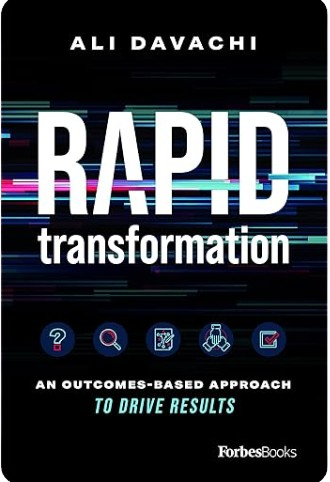
RAPID is Ali Davachi's outcomes-based transformation framework: Research, Analyze, Plan, Implement, and Decide.
It connects diagnosis, ownership, and execution around the changes a business needs. Learn how the RAPID framework works.
Can you help us decide where to use AI?
Yes. We help assess use cases, data readiness, workflow fit, integration needs, and governance before implementation.
AI adoption should start with a defined problem and a practical way to evaluate results.
Can we modernize without replacing all our existing systems?
Modernization starts with understanding dependencies and operational constraints. The roadmap can connect existing systems, improve specific workflows, and sequence changes so replacement is considered where it is justified.
What should we bring to the first conversation?
Bring your business priority, current systems, constraints, and expected timeline. You do not need a finished specification. We can discuss the problem and identify a practical next step together.
Where can I see Cognativ's work?
Our case studies describe the business challenges, work delivered, and reported outcomes behind client engagements.